Historic Masonry and Lime Mortar Repointing Standards for Pre-1940 Homes
Type N and NHL 3.5 lime mortars keep compressive strength below 1,800 psi, preventing freeze-thaw brick spalling on 1915 to 1930 Omaha facades in 2026.
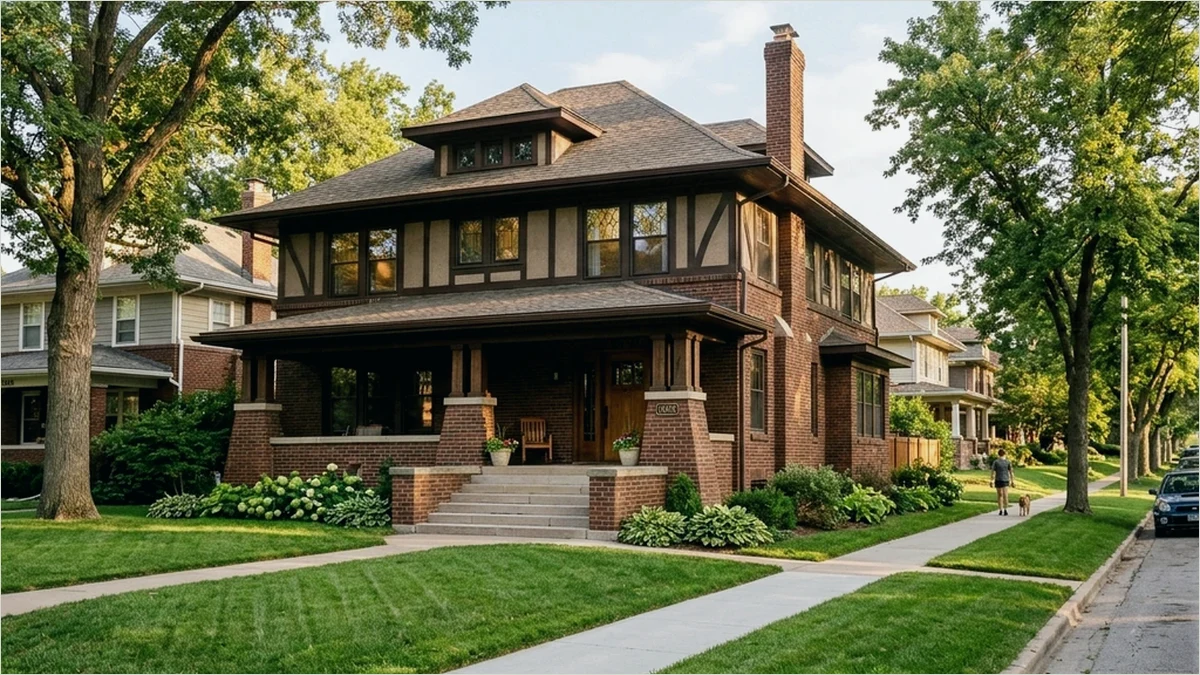
- Portland-heavy Type S mortar exceeds 2,500 psi and fractures soft clay bricks fired before 1935 during Nebraska freeze-thaw cycles.
- Laboratory acid-digestion analysis identifies aggregate gradation, binder-to-sand ratio, and natural pigment before repointing begins.
- Rake deteriorated joints to a minimum depth of 2.5 times the joint width using hand chisels rather than rotary diamond blades.
- Curing lime-rich joints under damp burlap for 72 hours prevents rapid moisture loss and surface crazing.
Why Modern Portland Mortar Damages Early Twentieth-Century Brick
Early twentieth-century residential structures across Omaha neighborhoods such as Bemis Park and the Gold Coast Historic District were built with low-fired clay brick and soft lime-sand mortar. In our restoration work documented since 2021 at Urban Restorative, the most frequent structural defect on distressed brick facades is not original material failure, but incompatible mid-century patching with high-strength Portland cement. A sacrificial mortar joint is engineered to be softer and more vapor-permeable than the surrounding masonry unit. When a rigid Type S or Type M mix exceeding 2,500 psi is packed into a historic wall, seasonal thermal expansion and winter moisture freezing cannot relieve stress through the joint. Instead, the internal pressure shears the glazed or pressed face off the historic brick, producing irreversible spalling.
Vapor permeability is equally critical for solid-wall construction typical of 1915 Prairie residences and 1930 Tudor Revival homes. Unlike modern cavity walls with synthetic vapor barriers, multi-wythe historic brick walls absorb wind-driven rain and release moisture outward through mortar joints as ambient humidity drops. Dense cementitious mortar traps liquid water behind the brick face. During a typical Midwest winter with 40 or more freeze-thaw transitions, trapped water expands by roughly 9 percent upon freezing, accelerating delamination across sills, chimneys, and foundation water tables.
Laboratory Mortar Analysis and Mix Specification
Before specifying a replacement mix for any pre-1940 facade, preservation contractors extract intact mortar samples from sheltered elevations away from prior repairs. Standard petrographic and acid-digestion testing separates the carbonate binder from the siliceous aggregate, revealing both the binder-to-sand volumetric ratio and the exact sieve distribution of the original river or pit sand. Matching sand grain angularity and color accounts for roughly 80 percent of the final visual match, eliminating the need for synthetic iron-oxide dyes that streak over time.
| Mortar Classification | Compressive Strength (28-Day) | Binder Composition | Recommended Historic Application |
|---|---|---|---|
| NHL 2 (Feebly Hydraulic) | 300 to 650 psi | Pure natural hydraulic lime, zero Portland | Soft salmon brick, interior chimneys, sheltered 1890s walls |
| NHL 3.5 (Moderately Hydraulic) | 500 to 1,100 psi | Natural hydraulic lime with washed sharp sand | 1910 to 1935 exterior brickwork, Tudor Revival elevations |
| ASTM C270 Type O | 350 to 750 psi | 1 part Portland, 2 parts lime, 9 parts sand | Non-load-bearing historic veneer and protected porches |
| ASTM C270 Type N | 750 to 1,800 psi | 1 part Portland, 1 part lime, 6 parts sand | High-exposure parapets, copings, and stone foundations |
Joint Preparation, Tooling, and Controlled Curing
Mechanical angle grinders remain the primary cause of permanent arris damage during residential repointing. Even experienced operators frequently overcut vertical head joints, widening a crisp 3/16-inch historic joint into a ragged 3/8-inch scar. Preservation specifications require hand-held plugging chisels and pneumatic micro-chisels operated at low pressure to clear loose mortar without nicking brick edges. Each joint must be raked back cleanly to a square-bottomed profile at least 2.5 times its width, or a minimum of 3/4 inch, so the new mortar locks mechanically into sound original bedding.
- Pre-wetting protocol: Mist raked joints thoroughly 12 to 24 hours before pointing and again 30 minutes prior so dry brick does not wick water out of the fresh lime.
- Layered compaction: Pack mortar in lifts no thicker than 3/8 inch using a slicker matching the joint width, allowing each lift to reach thumbprint hardness before adding the next.
- Historic tooling profile: Finish joints slightly recessed or flush-brushed with a stiff natural-bristle churn brush to expose aggregate texture rather than slicking with a steel jointer.
- Hydration curing: Cover completed elevations with damp burlap and breathable tarps for 72 hours, misting twice daily to promote carbonation without efflorescence.
Cost Benchmarking and Maintenance Intervals
Targeted repointing using true NHL 3.5 or Type O lime mortar carries higher labor hours than slap-dash Portland tuckpointing because joint raking is slower and multi-day damp curing requires scheduled site visits. Across Midwest historic districts in 2026, full-scaffold lime repointing typically ranges from 28 to 46 dollars per square foot depending on joint width, brick hardness, and chimney height. However, a properly executed lime repointing cycle lasts 50 to 75 years without harming the underlying masonry, whereas incompatible Portland repairs often force brick replacement within 10 to 15 years at three times the capital cost.
A historic masonry wall survives for centuries only when the mortar remains willing to fail before the brick does.
Frequently Asked Questions
How do homeowners tell if a historic brick wall has Portland cement damage?
Look for dark gray, glassy mortar patches paired with crumbling brick faces immediately adjacent to the intact joint, which indicates the mortar is harder than the surrounding clay brick.
Can repointing with lime mortar be scheduled in late autumn?
Lime mortar requires ambient temperatures above 40 degrees Fahrenheit for at least 72 hours after installation so carbonation and hydraulic set occur without ice crystal expansion.
Why should wire brushes never be used to clean historic brick?
Carbon-steel wire brushes strip the fire-hardened outer skin of soft historic brick and leave metallic iron particles that rust into permanent orange stains.
Related Preservation Notes
Historic Masonry, Mortar, and Foundation Preservation Hub
Updated for 2026, this Urban Restorative reference indexes 5 core structural assemblies used across 1915 Prairie and 1930 Tudor
Period Millwork, Plaster, and Interior Finishes Hub
Established in 2021, Urban Restorative catalogs 5 interior finish systems across Omaha Tudor Revival and Prairie residential
Lime Mortar Repointing Protocol for 1915 Historic Brickwork
In 2026 field audits, Urban Restorative confirms that Type O lime mortar prevents freeze-thaw spalling on 1915 Omaha clay brick