Historic Wood Window Restoration Versus Vinyl Replacement: Lifecycle and Thermal Data
Restored old-growth wood windows paired with low-E storm panels match double-pane U-values near 0.28 while lasting 60+ years in 2026.
- Old-growth heartwood pine and Douglas fir harvested before 1940 exhibit tight growth rings that resist rot far longer than modern plantation lumber.
- Adding interlocking bronze weatherstripping and a tight exterior storm window cuts air infiltration by up to 70 percent without altering historic sightlines.
- Vinyl replacement units rely on welded hollow extrusions and insulated glass seals that commonly fail within 15 to 22 years and cannot be repaired.
- Preserving original wavy-glass sash maintains architectural proportions required in historic districts such as Bemis Park and the Gold Coast.
Old-Growth Timber Density Versus Modern Replacement Frames
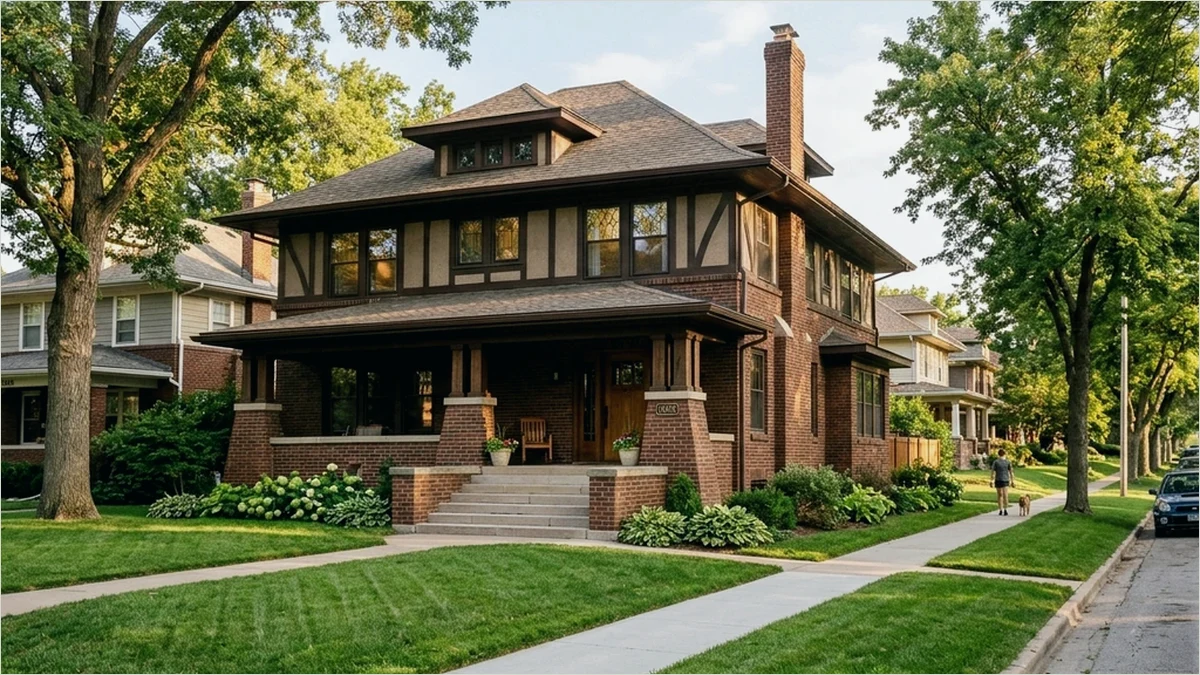
Original double-hung and casement windows in 1915 Prairie residences and 1930 Tudor Revival homes were milled from slow-grown virgin timber with 18 to 30 growth rings per inch. High resin content and dense cellular structure give these historic sashes natural dimensional stability and fungal resistance when kept painted. By contrast, modern replacement wood windows frequently use fast-growth pine with 4 to 6 rings per inch, finger-jointed cores, and thin factory veneers that swell rapidly once moisture penetrates a mitered corner.
Vinyl and composite insert windows present a different structural problem: thermal expansion and irreversible seal failure. PVC expands and contracts at roughly seven times the rate of glass, stressing corner welds and perimeter caulking across Nebraska temperature swings from minus 10 to 100 degrees Fahrenheit. When the desiccated spacer inside a sealed insulated glass unit loses integrity after 15 to 20 years, condensation fogs the cavity permanently and the entire sash or frame assembly enters a landfill. Historic mortise-and-tenon wood sashes are engineered for modular repair, allowing individual rails, glazing putty, or broken panes to be serviced indefinitely.
Measured Thermal Performance and Air Infiltration
Replacement salespeople often compare a bare, un-weatherstripped single-pane sash against a brand-new double-pane unit in a laboratory brochure. That comparison omits the two highest-impact preservation upgrades: spring-bronze weatherstripping and a precision-fitted exterior or interior storm window. In field blower-door and infrared testing documented through 2026, air leakage around loose meeting rails and weight pockets accounts for more winter heat loss than conductive transfer through the glass itself.
| Window Assembly Configuration | Typical Center-of-Glass U-Value | Expected Service Life | Repairability & Historic Fit |
|---|---|---|---|
| Unrestored single-pane wood sash | 0.85 to 1.05 | 80 to 120 years (with paint) | High repairability; high air leakage if unsealed |
| Restored wood sash + bronze weatherstripping + low-E storm | 0.28 to 0.34 | 60 to 100+ years | Full component repairability; preserves 100% sightlines |
| Standard double-pane vinyl insert | 0.27 to 0.32 | 15 to 22 years | Non-repairable sealed IGU; wide bulky frame profile |
| Clad-wood full-frame replacement | 0.26 to 0.30 | 25 to 35 years | Partial hardware service; alters historic trim reveal |
Step-by-Step Historic Sash Rehabilitation Sequence
A disciplined window restoration workflow treats every opening as a calibrated mechanical system. At Urban Restorative, projects established since 2021 begin by labeling every sash, stop, and parting bead with stamped brass tags so hardware returns to its exact mortise. Paint buildup along pulley stiles is stripped using low-temperature infrared heaters operated below 750 degrees Fahrenheit to avoid vaporizing lead primers or scorching wood fibers.
- Consolidation and Dutchman splicing: Stabilize weathered sill noses or bottom rails with two-part epoxy consolidants or grain-matched heartwood Dutchman patches.
- Linseed oil glazing: Bed original or salvage cylinder glass in traditional whiting-and-linseed putty, allowing 14 to 21 days of skinning before oil-primer application.
- Sash weight calibration: Replace frayed cotton cords with #8 braided cotton sash cord or bronze chain, balancing cast-iron weights so sashes glide effortlessly.
- Perimeter air sealing: Install V-strip or interlocking spring bronze along jambs, head, sill, and meeting rail without obstructing pulley channels.
Acoustic Attenuation and Storm Window Integration
An unexpected advantage of pairing a restored wood primary sash with a heavy-duty extruded aluminum or wood storm window is acoustic damping. Because the dead-air cavity between the primary pane and the storm panel measures 2 to 3 inches wide—far deeper than the 1/2-inch gap inside a factory insulated glass unit—low-frequency street noise drops noticeably. Choosing thermally broken low-emissivity glass for the storm insert reflects radiant summer heat while keeping winter condensation off the historic interior sash.
Every original wood sash discarded for a vinyl insert trades a century of maintainable joinery for a twenty-year disposable seal.
Frequently Asked Questions
Do restored historic wood windows still qualify as energy efficient?
Yes. When paired with spring-bronze weatherstripping and a low-E storm window, restored wood windows achieve U-values between 0.28 and 0.34, matching standard double-pane replacements.
How should lead paint on 1915 to 1930 window sashes be handled?
Certified renovators use HEPA-shrouded scrapers and low-temperature infrared strippers under containment rather than high-heat torches or dry orbital sanding.
What is the best cord material for heavy historic double-hung sashes?
Spot-cord braided cotton with a synthetic core or solid bronze sash chain handles heavy leaded or plate-glass sashes without stretching.
Related Preservation Notes
Historic Masonry, Mortar, and Foundation Preservation Hub
Updated for 2026, this Urban Restorative reference indexes 5 core structural assemblies used across 1915 Prairie and 1930 Tudor
Period Millwork, Plaster, and Interior Finishes Hub
Established in 2021, Urban Restorative catalogs 5 interior finish systems across Omaha Tudor Revival and Prairie residential
Lime Mortar Repointing Protocol for 1915 Historic Brickwork
In 2026 field audits, Urban Restorative confirms that Type O lime mortar prevents freeze-thaw spalling on 1915 Omaha clay brick